 English
 Français

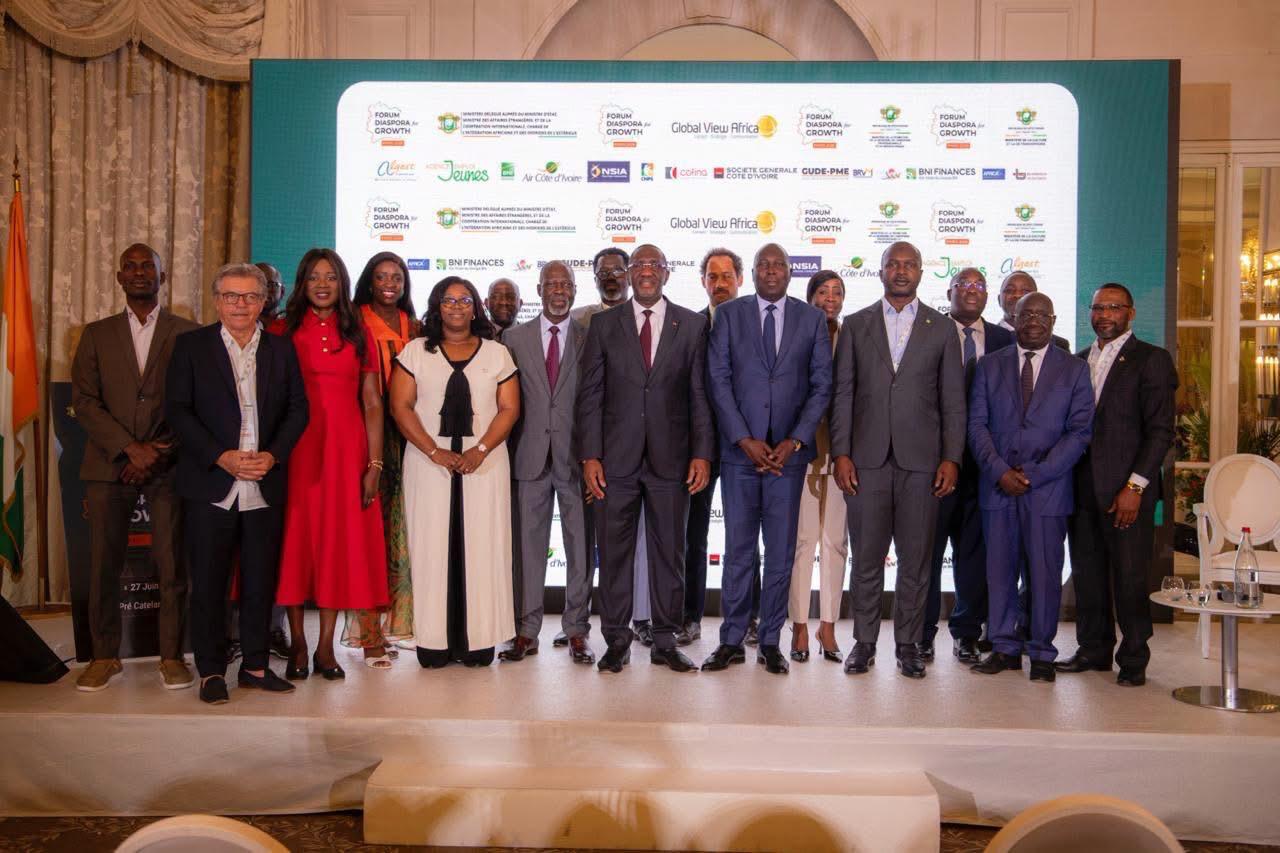
Paris, the fashion capital, was also the capital of Ivorian finance this weekend. Indeed, a meeting, organized on the sidelines of the “Diaspora for Growth 2026” forum, was held in the presence of the Minister Delegate in charge of African Integration and Ivorians abroad as well as the Ambassador of Côte d'Ivoire to France. In front of this composite audience, mixing entrepreneurs, executives and students, the Minister of Planning detailed an ambition, to make the Ivorian community abroad a central player in financing national development.
The figures speak for themselves, annual transfers from the Ivorian diaspora now exceed 900 billion CFA francs, an amount greater than public development assistance received by the country. This progression is spectacular over time since these flows increased from 99.5 billion CFA francs in 2008 to around 938.8 billion in 2025, an increase of more than 540% in 15 years. The government's challenge now consists of transforming this windfall, today largely absorbed by household consumption, into productive investment that generates jobs and added value.
To achieve this, government policy is structured around three complementary axes presented in Paris. The first axis consists of dedicated financial instruments, in particular specific compulsory loans and an investment fund reserved for the diaspora, intended to channel savings towards concrete projects. The second axis aims to secure the investment environment, via a one-stop shop and mechanisms to protect projects carried out by Ivorians abroad. The third axis concerns the valorization of skills, so that the expertise acquired abroad irrigates strategic sectors such as industry, digital, fintech and research.
This strategy is part of the National Development Plan 2026-2030, which provides for a colossal investment program of 114,838.5 billion CFA francs, of which 70.2%, or 80,614.7 billion, expected from the private sector. The public share, set at 34,223.9 billion CFA francs, will not be sufficient on its own to achieve this ambition, hence the crucial role attributed to private investors, which includes the diaspora. Clearly, Abidjan is also banking on the contribution of its millions of nationals abroad to help finance its decade of economic transformation.