
 English
 Français

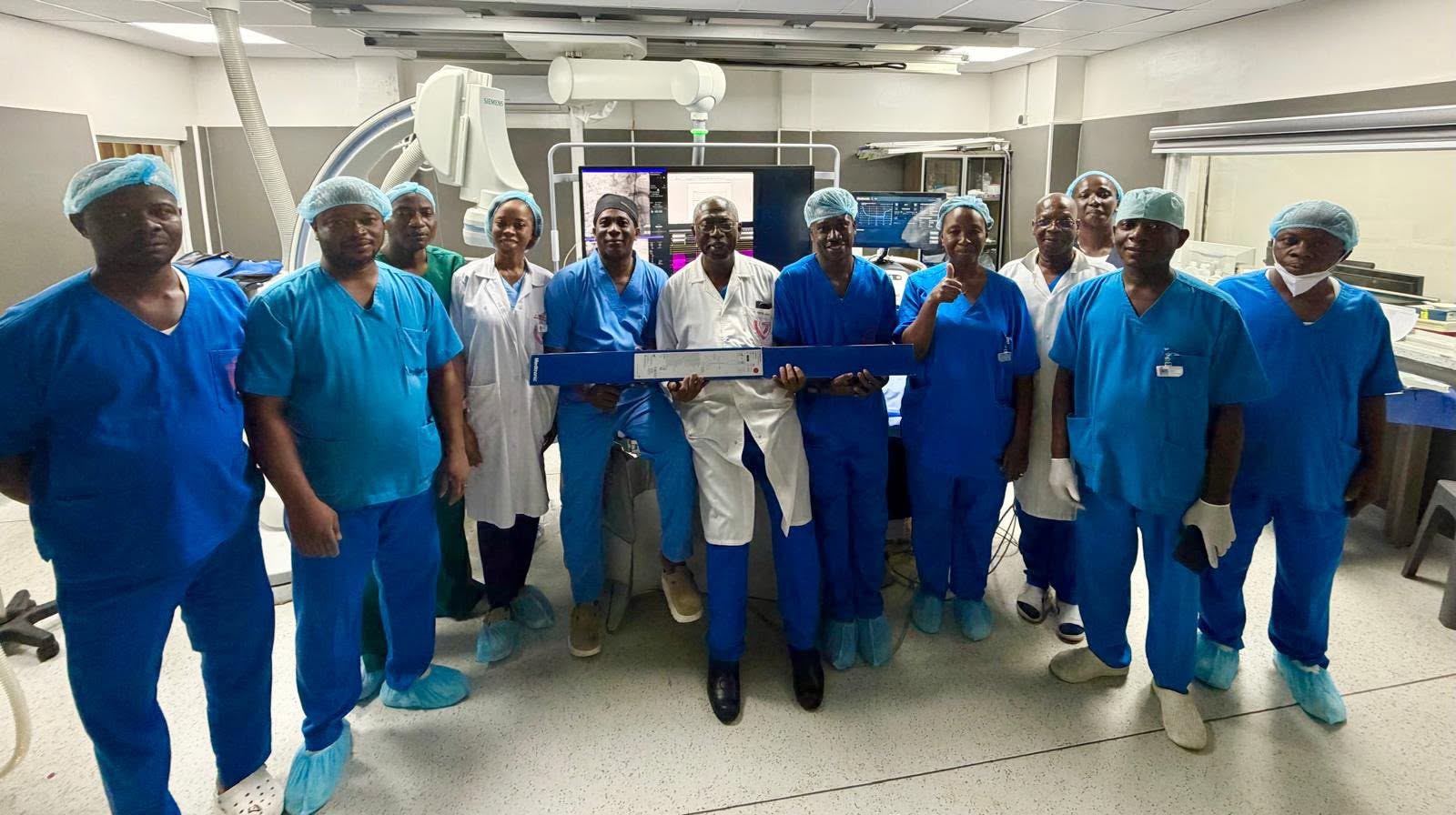
The Abidjan Cardiology Institute (ICA) recently performed the first atrial fibrillation ablation ever performed in sub-Saharan Africa. Performed on a 56-year-old patient suffering from a very symptomatic form of this arrhythmia, the procedure was successful. The patient left the establishment the next day. Beyond medical performance, this operation marks the arrival in the sub-region of a cutting-edge technique previously reserved for a few specialized centers in Europe, America and North Africa. The intervention was carried out by a team of rhythmologists composed of professors Adoubi Annicet and N’Djessan Jean-Jacques as well as doctor Kouamé Stéphane. A multidisciplinary team involving the anesthetist Dr Tshihiluka, Professor Ncho-Mottoh for the cardiac scanner and Dr Angoran for ultrasound guidance participated in the treatment. A Canadian medical mission bringing together specialists from the Montreal Heart Institute and the Sacré-Cœur Hospital in Montreal was also present. The operation benefited from the support of the Mitrelli group. This intervention opens new perspectives for thousands of patients in West Africa facing atrial fibrillation, a disease still little known to the general public but considered to be the most common heart rhythm disorder in the world.
A disease that is gaining ground in Africa
According to data from the Global Burden of Disease Study published in The Lancet, nearly 59.7 million people were living with atrial fibrillation in 2019. This condition is responsible for around 315,000 deaths per year across the world. It is also one of the main risk factors for stroke. Atrial fibrillation is characterized by disorganized electrical activity in the atria of the heart. This anomaly causes irregular beats that can lead to palpitations, chest pain, shortness of breath, chronic fatigue or even a reduction in physical abilities. In some patients, it promotes the formation of blood clots that can travel to the brain and cause a stroke. According to theWorld Health Organization, cardiovascular diseases remain the leading cause of mortality in the world with nearly 19.8 million deaths, or approximately 32% of all deaths in 2022. Africa is no exception to this trend. Increased life expectancy, urbanization, high blood pressure, diabetes and obesity contribute to a continued progression of heart disease on the continent.
In Côte d'Ivoire, high blood pressure (the main modifiable risk factor for developing arrhythmia) already represents a major public health problem. The study “Emergency treatment of arrhythmias at the Abidjan Cardiology Institute” showed that atrial fibrillation is among the rhythm disorders regularly encountered in hospitalized patients. Specialists are observing a gradual increase in cases linked in particular to the aging of the population and the increasing frequency of cardiovascular risk factors. Until now, patients suffering from severe forms of atrial fibrillation have mainly resorted to drug treatments. However, antiarrhythmic drugs do not always provide lasting control of the disease. Recurrences are common and certain medications cause significant side effects. Catheter ablation today constitutes one of the main therapeutic options for symptomatic patients. It consists of introducing probes through the blood vessels in order to identify the areas responsible for electrical disturbances and to neutralize these abnormal foci. The procedure is performed without opening the thorax. Several studies have confirmed the benefits of this technique. The CASTLE-AF trial, published in the New England Journal of Medicine, notably showed a reduction in hospitalizations and an improvement in survival in patients also suffering from heart failure. A meta-analysis published in 2022 in Europace also concluded that there was a reduction in the risk of death and hospitalization thanks to this approach.