 English
 Français

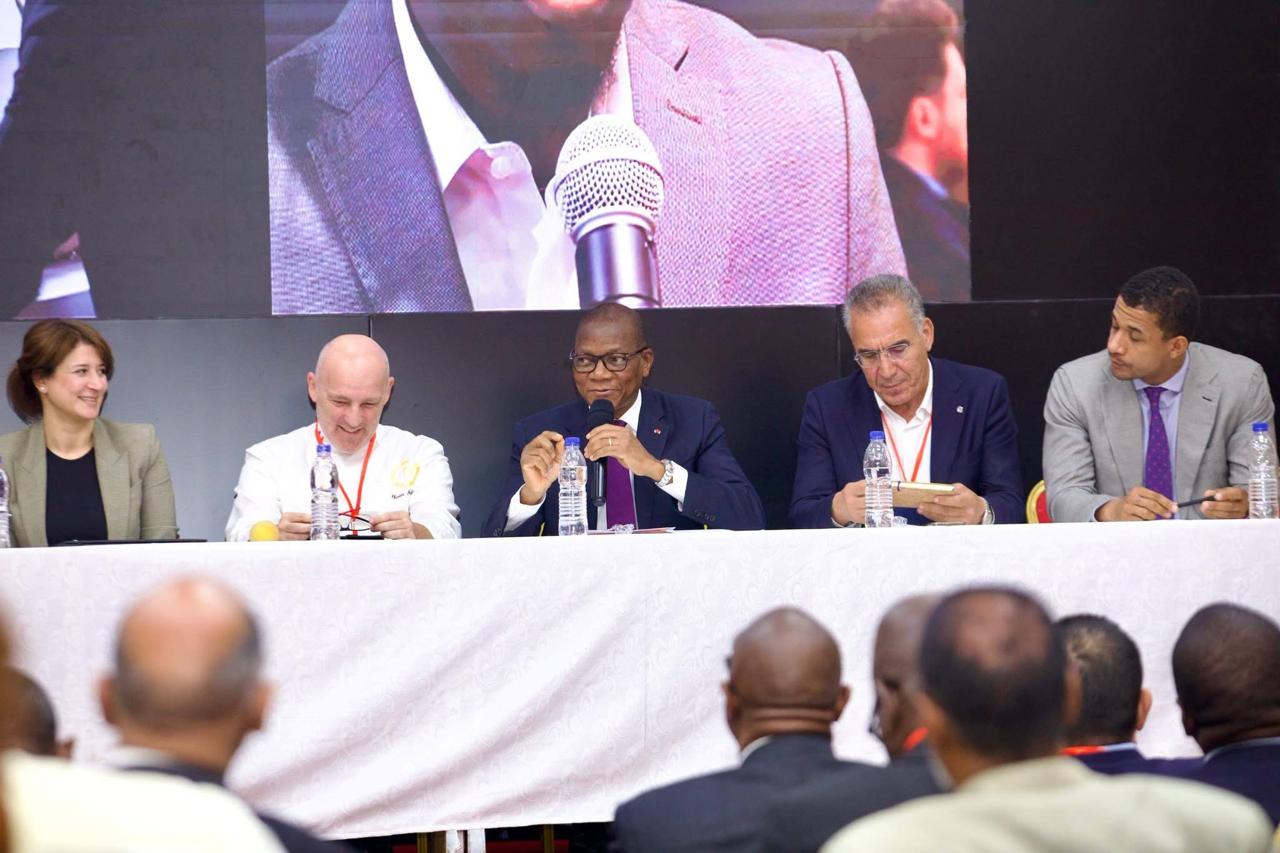
The Minister of Agriculture, Rural Development and Food Production, Bruno Nabagné Koné, unveiled on June 17, the five priority axes around which the government intends to restructure the Ivorian agricultural sector, on the occasion of the 14th edition of the Africa Abidjan 2026 Meetings, held on 16 and June 17, 2026 at the Maison de l’Entreprise in Plateau. Food sovereignty, the competitiveness of sectors, agricultural financing, the security of rural land and the sustainability of production systems constitute the main levers on which the government intends to rely to accelerate the transformation of the agricultural sector. This orientation comes in a context where agriculture still remains a fundamental pillar of the national economy, as was the case at independence, with the slogan “the success of this country rests on agriculture”. According to data from the Ministry of Agriculture and the World Bank, the sector represents nearly 20% of the gross domestic product and mobilizes more than 40% of the active population.
Côte d'Ivoire also maintains its position as the world's leading producer of cocoa with more than two million tonnes produced each year and is among the main producers of cashew nuts, rubber trees and coffee. The first priority presented by the minister concerns food sovereignty. The government intends to reduce the country's dependence on food imports and increase local production of consumer goods. This orientation takes place in a context marked by disruptions in global supply chains and the consequences of climate change on agricultural systems. The competitiveness of the sectors constitutes the second pillar of this strategy. The stated objective is to increase the added value created on the national territory through greater processing of raw materials. Ivory Coast already processes more than 40% of its cocoa production and aims to further strengthen its industrial capacities in several agricultural sectors. To this end, the minister invited investors to support local transformation projects.
A reform articulated around financing, land and sustainability
The third axis concerns agricultural financing. Despite its weight in the economy, the sector remains faced with limited access to credit. The authorities thus wish to encourage greater mobilization of financial resources in order to encourage investments, the mechanization of farms and the adoption of new technologies. Securing rural land constitutes the fourth project. The land issue remains one of the major challenges of agricultural development in Côte d’Ivoire. The issuance of land certificates and the clarification of property rights are among the preferred instruments to reduce conflicts and offer more guarantees to operators and investors. Finally, the sustainability of production systems completes this roadmap. Faced with the effects of climate change and the progressive degradation of natural resources, public authorities are focusing on more resilient and more environmentally friendly agricultural practices.
At the end of his speech, Bruno Nabagné Koné also invited economic operators to participate in the launch of the Third Generation National Agricultural Investment Program (PNIA 3), planned under the presidency of Prime Minister Robert Beugré Mambé. This program is intended to constitute the main framework for implementing the orientations presented during the Africa Abidjan 2026 Meetings.